
Shade wind damage Phoenix AZ
Wind damage repair for exterior shades and awnings after Phoenix storms.
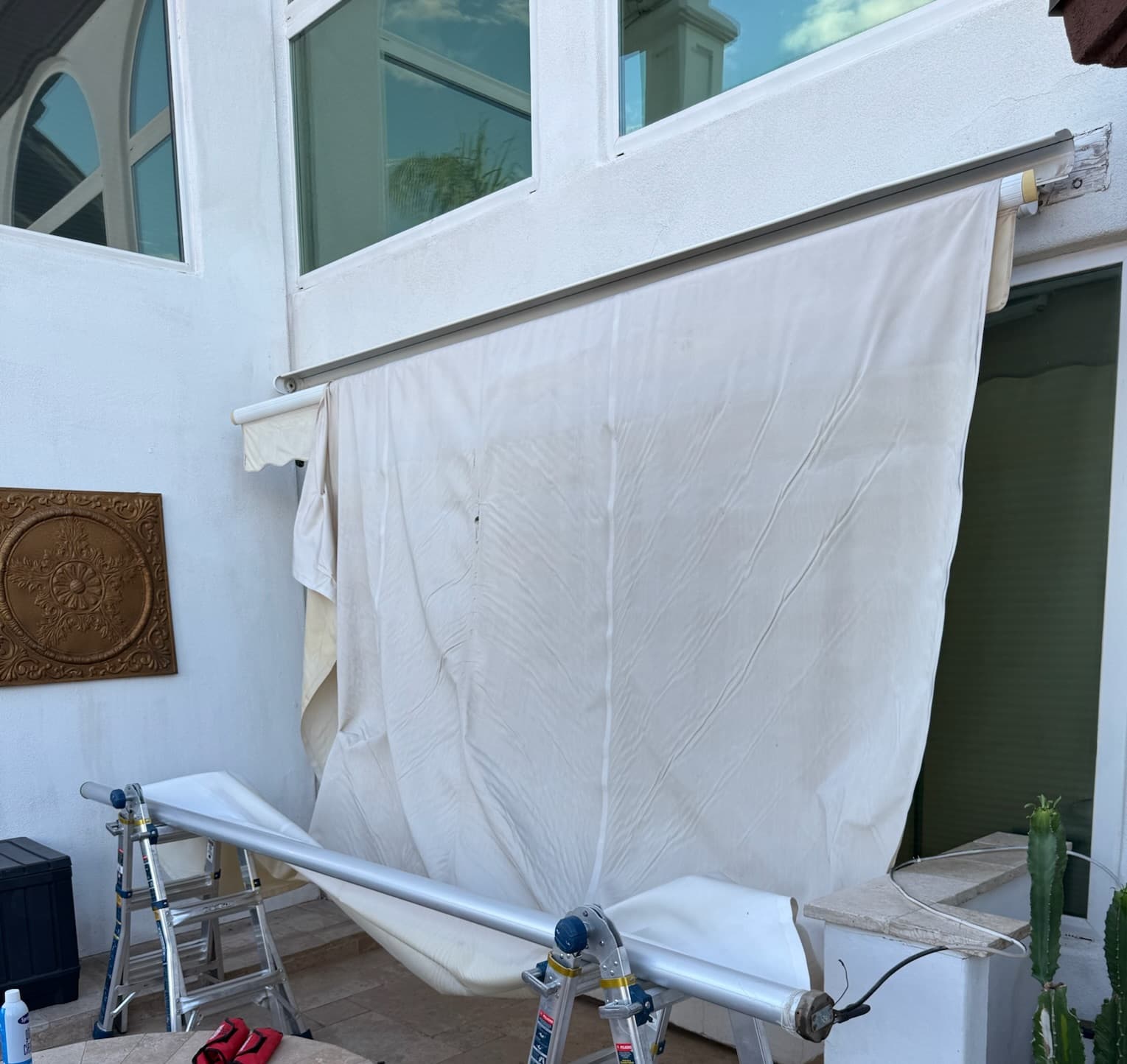
Monsoon weather and open exposure can damage shades fast. A system may still move after wind damage, but that does not mean it should keep running without inspection. Hardware can be bent, fabric can be stretched, and brackets can be carrying more strain than they should.
Symptoms we see
These calls usually show up with a pattern, not one isolated clue.
Bent arms, brackets, or bottom bars after strong wind
Fabric stretched, torn, or pulled unevenly
Retained screen no longer enters the track correctly
Shade still runs but now makes noise or hangs crooked
What it may indicate
Diagnosis matters because the visible symptom is often not the root cause.
Wind load beyond the system's safe operating condition
Sensor settings that did not react soon enough or were bypassed
Existing wear that made the product less tolerant of storms
Hardware stress that is not fully visible from the ground
When to stop using it
Protect the system before a small issue becomes a bigger repair.
Do not keep cycling a storm-damaged shade or awning just because the motor still works. Hidden bracket or arm damage can make the next cycle the worst one.
What to send us
A few photos can save a lot of back-and-forth.
Send wide photos of the full damaged product, close-ups of bent parts or torn fabric, and any sensor or control details if the system is motorized.
Related products
Resources
Programming Help
Overview for Somfy, Dooya, MaestroShield, Gaposa, SummerSpace, remote pairing, limits, hubs, sensors, and troubleshooting paths.
Open resourceSomfy Programming
Somfy RTS, myLink, TaHoma, and control-system guidance before deeper repair work.
Open resourceGaposa Programming
Gaposa transmitter, SYNC/LIMIT, direction, and memory-reset guidance.
Open resourceSummerSpace Programming
SummerSpace awning remote pairing, Alpha-style electronic limits, and shake sensor guidance.
Open resourceDooya Programming
Dooya DD2700H/DD2702H pairing, direction, electronic limit, channel, and reset guidance.
Open resourceMaestroShield Programming
MaestroShield Smart Motor and Hybrid remote, LED control, electronic and mechanical limit, and reset guidance.
Open resourceNeed wind damage repair in Phoenix?
We can inspect whether the system can be corrected, recovered, partially rebuilt, or whether replacement is the safer long-term path.